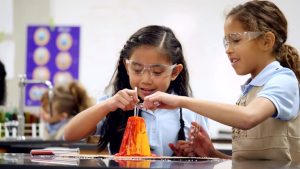
Children remember what they do. That is why hands-on science experiments Blackburn families can access through home education groups, libraries, community venues, and local workshops matter more than ever in 2026. Research keeps backing this up: meta-analysis evidence shows that inquiry based and hands-on approaches improve science achievement compared with more passive instruction (Furtak et al, 2012). At the same time, the UK continues to push STEM skills for the future economy, and families are looking for practical, affordable learning that feels joyful and real.
In this guide you will learn what children gain from practical science activities, how to choose age-appropriate science investigations, what skills link directly to school and real life, and how to run safe, low-cost experiments at home or in community settings in Blackburn.
Why hands-on science matters for children in Blackburn right now?
Hands-on science is not just about making a volcano. It is about building the habits children need to thrive, like curiosity, resilience, and careful thinking. In Blackburn, where families often combine home education science with community groups and enrichment clubs, practical learning helps children connect science to their everyday world.
It builds understanding that sticks
When children mix, measure, observe, and test, they create memory links that are hard to replicate with worksheets alone. Inquiry-based teaching has been shown to improve learning outcomes, especially when guidance is included rather than leaving children to guess (Furtak et al, 2012). That balance matters for families, because it means you do not need to be a science specialist to do this well.
It supports wellbeing and confidence
Practical science activities make space for trial and error. Children learn that a failed result is still useful data, not a personal failure. This is a quiet but powerful mindset shift, especially for children who feel anxious about getting things wrong.
It links learning to local life
Blackburn has parks, rivers, gardens, heritage sites, and strong community networks. These give children real contexts for science investigations, from weather tracking to habitats, to materials and engineering challenges using everyday items.
Core learning outcomes children gain from science experiments
Science experiments for kids Blackburn families try at home or in workshops can develop a wide range of skills. Some are science-specific, and others are life skills that show up everywhere from reading comprehension to teamwork.
Scientific thinking and the inquiry cycle
Children learn to ask a question, make a prediction, plan a test, observe carefully, and explain what happened. This mirrors how real science works, and it supports the kind of reasoning assessed in schools. In the Early Years and primary stages, it often looks like simple exploration. By later primary and secondary, it can become more structured.
Numeracy and communication through science
Children practise measuring, comparing, and recording. They also learn to explain what they did and what they noticed. International evidence suggests that students benefit when science includes structured opportunities to reason, discuss, and write about findings (OECD PISA, 2022).
Creative problem solving and engineering habits
STEM activities Blackburn families enjoy often include building and testing. For example, making a bridge from paper, or designing a container that keeps an ice cube from melting. Children learn planning, iteration, and design trade-offs. These are the same habits used in real engineering and product design.
What children learn by age: practical skills and experiment ideas?
The same experiment can teach different things depending on age. Below is a simple guide you can use for planning home education science or choosing workshops. The goal is not perfection. The goal is progression and confidence.
Age range | What children can learn | Good experiment types | Adult role |
|---|---|---|---|
Early years | Noticing changes, naming materials, simple cause and effect | Sinking and floating, colour mixing, ice melting, shadows | Model language, keep it playful, ask gentle questions |
Primary | Fair tests, simple recording, pattern spotting, basic variables | Plant growth tests, magnet hunts, ramp experiments, simple circuits | Help them plan one change at a time and record outcomes |
Lower secondary | More precise measurement, graphs, evaluating reliability | Reaction rates, filtration, insulation challenges, micro habitat studies | Support safe setup, introduce controls, encourage reflection |
Upper secondary | Deeper explanations, modelling, linking results to theory | Investigations with repeat trials, energy transfers, forces and motion | Discuss limitations, data quality, and real-world applications |
Tip for mixed ages: choose one activity, then give different roles. A younger child can observe and draw. An older child can measure and record. Everyone can share one conclusion at the end.
What is changing in 2026: STEM trends families should know
STEM learning in 2026 is being shaped by three big shifts: the rapid growth of AI tools, a stronger focus on climate and sustainability, and increasing attention to skills-based learning that can be evidenced through portfolios.
AI is changing how children research and present science
Many families now use AI tools to generate quiz questions, explain vocabulary, or help structure lab reports. The important skill is not banning AI. It is teaching children how to check claims and compare with trusted sources. The World Economic Forum continues to place analytical thinking and problem solving among top workforce skills (World Economic Forum, 2023), and science experiments are a child-friendly way to build these habits.
Climate and nature learning is more central
Hands-on science experiments Blackburn families choose increasingly connect to climate topics like insulation, energy transfer, biodiversity, and water. This matches wider education and community trends where sustainability is not a separate subject but a thread through practical learning.
Evidence of learning matters more than perfect results
In home education science, many parents now keep simple portfolios. A photo of a build, a short child explanation, and one reflection sentence can show learning clearly. This can also support transitions into school settings or GCSE pathways later on.
Conclusion
Hands-on science experiments Blackburn families can access are not just fun activities. They are a powerful way to build lasting understanding, practical skills, and confidence. In 2026, with STEM and AI changing learning quickly, the ability to test, observe, and explain is a genuine superpower for children.
Choose one experiment theme from this article and run a mini investigation this week. If you would like community-based sessions that feel friendly and supportive, Simple Lessons CIC can help families discover playful practical science activities and local enrichment opportunities that make learning feel connected and possible.